


With the ever-growing population on Earth, impacted by climate change and the consequences of an economy based on petro-sourced products, we have to find alternative solutions for the future. And that’s where the OPALGUE programme comes in, with the exploration of seaweed farming and processing.


Can we grow seaweeds in Northern France? Which seaweeds, in which conditions and how?

Can we add seaweeds to the exploitable species of our shores?

Valorisation included,
what are the viable business models?

What are the impacts of farming on our coastal ecosystems?

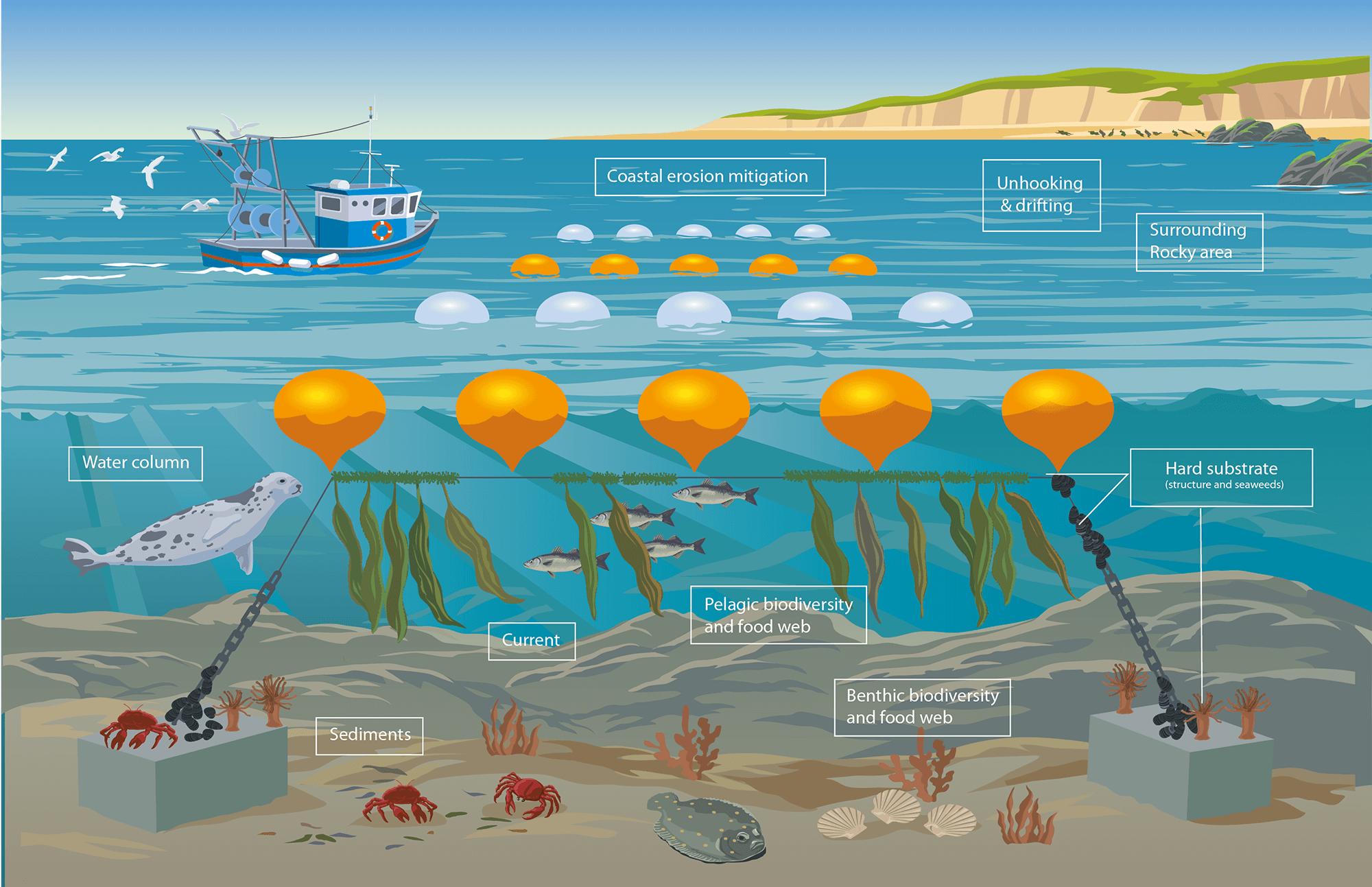
Like all plants, seaweeds fix carbon, bring oxygen and purify the environment they are in. At the start of the food chain, seaweeds constitute a source of food for numerous marine species. The structure which supports them could act like a reef offering a refuge to some species, contributing to limit coastal erosion. Therefore, seaweeds are good for our planet and with OPALGUE, we aim to measure it, for a team of committed scientists is setting up a dedicated monitoring all through the farming experiment.
Moreover, our care for the environment doesn’t stop here as the exploration of the seaweed processing is focused on a complete development of the matter, without any waste, using green extracting procedures which respect the environment


It is a brown kelp seaweed growing up to 3m in length with a waffle-like golden texture. Sugar kelp is the most farmed variety in Europe. Rich in fibre, minerals and vitamins with an iodic taste, it is the base of Japanese broths. It is also used to enhance the flavour of dishes or cooked with fish in foil and known for its detoxifying and purifying properties, hence its use in cosmetics


Thin and elastic, Nori is a red seaweed, although it is in reality closer to purple or even black. The most common in the world, we all know it dry in the shape of a leaf around makis. But it also contains numerous essential amino acids and is extremely rich in proteins and vitamins. One can find it in nutraceuticals and cosmetics thanks to its repair and photoprotective functions.


It lives exclusively on the North-Atlantic coasts (Europe, Canada). Dulse is a purple seaweed called goémon à vache because it was given to cattle, but its ‘crustacean’ flavour also makes it an ingredient of choice for cooking. It is rich in proteins, vitamins and minerals; therefore, it has remineralising, tonifying and detoxifying virtues which are interesting for cosmetics.


It was called like this because it looks like a hand with finger. Oarweed is a brown seaweed which grows in the cold waters of the Atlantic and Pacific oceans. It is generally caught by the goémoniers. Its alginate is extracted, it is a texturing agent found in sauces, beauty products, capsules or in biosourced materials (packaging, thread…).


Our sea lettuce lives naturally, fixed to the substrate. Its colour can vary from a light to a dark translucent green. Its taste is very popular in France. It can be cooked with numerous dishes, dry (flakes) or fresh. Moreover, it is excellent for our bodies, as it is rich in proteins, fibre and contains magnesium, iron, vitamins A, B12, C amongst others, a lot more than many fruits and vegetables.
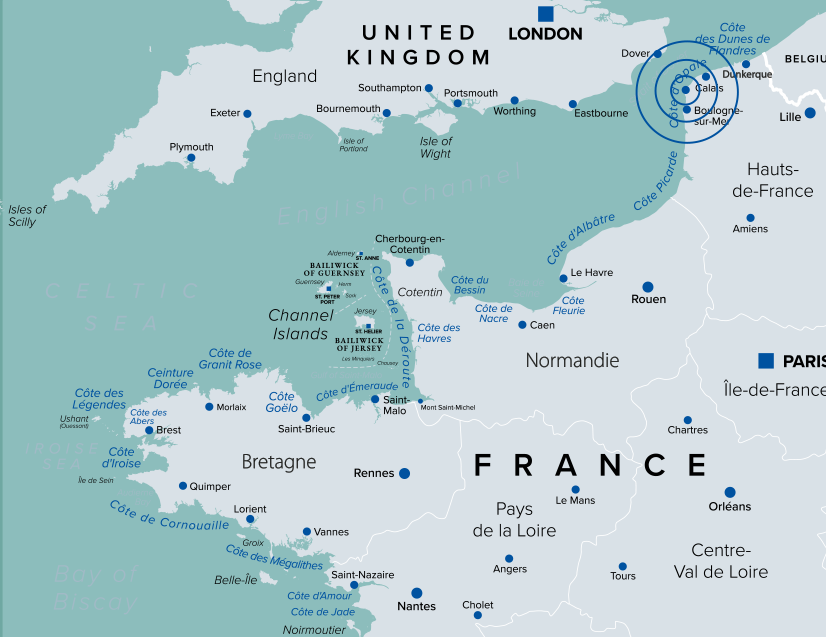
Northern France hosts the biggest European hub for marine products processing and the biggest fishing port in France. La Côte d'Opale offers a coastline known for its biodiversity with favourable farming conditions for seaweed development. Getting together to consider a seaweed industry, it was an evidence!
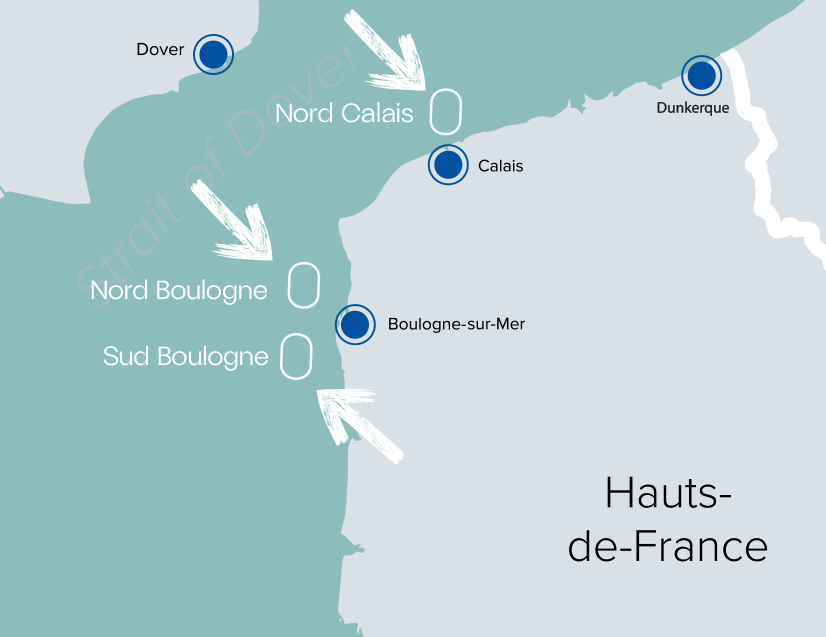
In order to test several configurations, we have 3 experimental plots of 5ha (100x500m) about 2km away from the shore. Their locations are compatible with professional and recreational activities. They are optimal in regards to the environment conditions. The programme also uses a hatchery in Wimereux and the Boulogne sur mer’s stabilisation and storage factory floors.
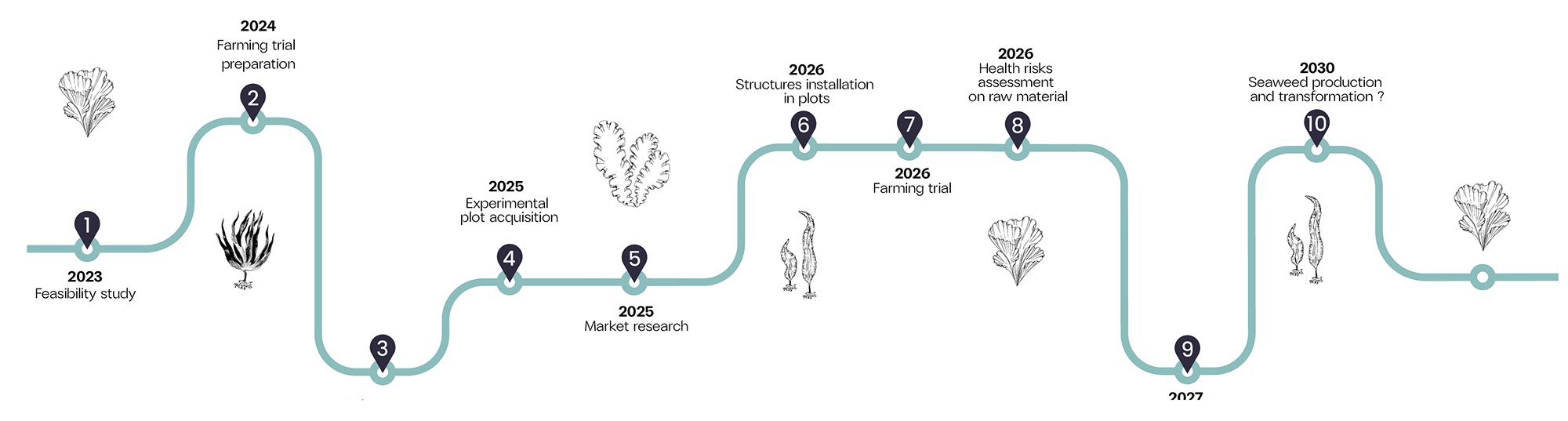
OPALGUE is a long-term programme, a group of exploratory projects whose common perspective is to respond to the programme objectives and, little by little, to create a seaweed branch through sustainable production and high added value transformation in Northern France. The aim is also to contribute to the development of a French and European model.


We still ignore a lot of things about seaweeds, however, they have a lot of powers! They are super foods with varied flavours and numerous benefits: they improve our health and have ingredients great for human beings, plants and animals. They also make a material with structuring properties which can be applied in the food-processing as well as biomaterials.


